Why South Carolina Retail Slip & Fall Claims Are Unique
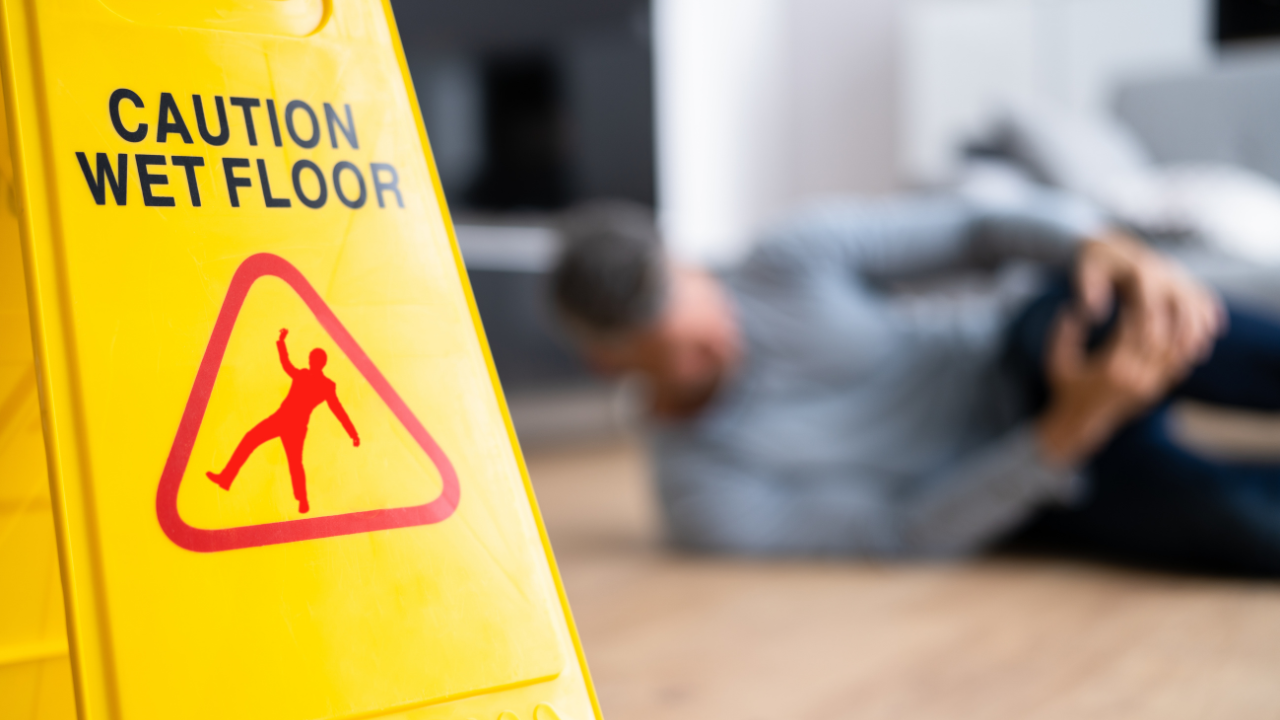
A slip and fall accident isn’t just a clumsy moment; in South Carolina retail stores, it can be a serious legal matter involving premises liability law. Whether you are shopping at a grocery store, a big-box retailer, a local mall, or a pharmacy, store owners have a responsibility to keep their property safe for customers. In the eyes of South Carolina law, customers are typically classified as “invitees,” which means they are afforded the highest level of protection while browsing the aisles or walking through the parking lot. However, simply falling down doesn’t mean the store writes you a check; there are specific legal standards that must be met.
If you have been hurt while shopping, you might be wondering what comes next. This article will guide you through exactly how negligence works in South Carolina and what specific elements you must prove to build a successful case. We will cover the common defenses stores use to avoid paying, the types of evidence that can make or break your claim, and the strict timelines you need to follow. From understanding the difference between actual and constructive knowledge to taking the right steps immediately after a fall, we have got you covered on how to protect your rights.
Understanding Premises Liability and Negligence in South Carolina Retail Stores
Premises liability is a specific area of law in South Carolina that holds property owners accountable for injuries that happen on their land or in their buildings. Slip and fall cases are the most common type of premises liability claim filed against retail stores. Essentially, when a business opens its doors to the public to make a profit, they take on the responsibility of ensuring the environment doesn’t pose unreasonable risks to the people they invite inside.
However, holding a store accountable requires proving negligence. In South Carolina, establishing negligence isn’t a guessing game; it requires four distinct elements: duty of care, breach of that duty, causation, and damages. These same four pillars apply to every slip and fall case, whether it happened in a small boutique or a massive supermarket. You must show that the store had a job to do regarding your safety, they failed at that job, and that specific failure is the direct reason you are injured today.
It is crucial to understand that the law does not guarantee your safety just because you stepped foot in a store. Simply falling and getting hurt is not enough to establish liability or win a lawsuit. The core of the law focuses on whether the store failed to act with “reasonable care” under the circumstances. If the store did everything right and you still fell, there may be no negligence; the key is proving they dropped the ball on safety.
Legal Status of Shoppers: Invitees, Licensees, and Trespassers in SC
In South Carolina, the duty a property owner owes you depends entirely on why you are on the property. The law divides visitors into three main categories: invitees, licensees, and trespassers. Your legal status determines how hard the store has to work to keep you safe. Understanding which category you fall into is the first step in determining if you have a viable claim for negligence.
Fortunately for shoppers, retail store customers are almost always considered **invitees**. This is the highest status under South Carolina law because the store benefits from your presence. Consequently, store owners owe invitees the duty of exercising reasonable or ordinary care to keep the premises reasonably safe. This includes not just fixing known problems, but also actively inspecting the aisles and walkways to discover hidden hazards before someone gets hurt.
In contrast, licensees (like a social guest) and trespassers (someone without permission to be there) are owed a much lower duty of care. For these groups, the property owner generally only needs to avoid willful or wanton negligence or warn of known dangers, rather than actively inspecting for new ones. Because the burden of proof is much higher for licensees and trespassers, the fact that you were a customer shopping during business hours is a massive advantage in a slip and fall case.
Elements You Must Prove to Claim Negligence After a Slip & Fall in a South Carolina Retail Store
The first element you must prove is the **duty of care**. You need to demonstrate that the store owed you a duty because you were lawfully on the property as a customer, vendor, or potential buyer. As mentioned earlier, this duty requires the store to take reasonable steps to inspect their floors, shelves, and entryways for dangerous conditions that could harm you.
Next, you must prove a **breach of duty**. This means showing that the store failed to act as a reasonable retailer would have under similar circumstances. For example, if a gallon of milk spilled in a grocery aisle and store employees ignored it for an hour, or if they mopped the floor but failed to put out a “Wet Floor” sign, that inaction or oversight constitutes a breach of their duty to keep you safe.
“Retail store customers are considered ‘invitees,’ which means retail store employees have a duty to ‘locate and fix’ any dangerous conditions that might cause a slip and fall accident.” -Enjuris
The third element is **causation**, which links the store’s mistake directly to your accident. You must prove that the specific dangerous condition—like the unmarked spill or the loose floor mat—was the actual cause of your fall. In South Carolina, you cannot rely on speculation; you cannot just say, “I think I slipped on something.” You need evidence connecting the hazard to the fall and the fall to your injuries.
Finally, you must prove **damages**. Even if the store was negligent, you cannot file a lawsuit if you weren’t hurt. You must show that you suffered actual harm, such as medical bills, lost wages from missing work, physical pain, or the need for future medical treatment. Without provable damages, a negligence claim will fail because there is nothing for the court to compensate you for.
Actual vs. Constructive Knowledge: Proving the Store Knew About the Hazard
One of the biggest hurdles in these cases is proving the store knew about the danger. **Actual knowledge** is the easier of the two to understand but can be harder to find evidence for. This exists when the store directly knew about the hazard, such as an employee watching a customer drop a jar of pickles and walking away, or an employee actually creating the hazard themselves by leaving a pallet in a walkway.
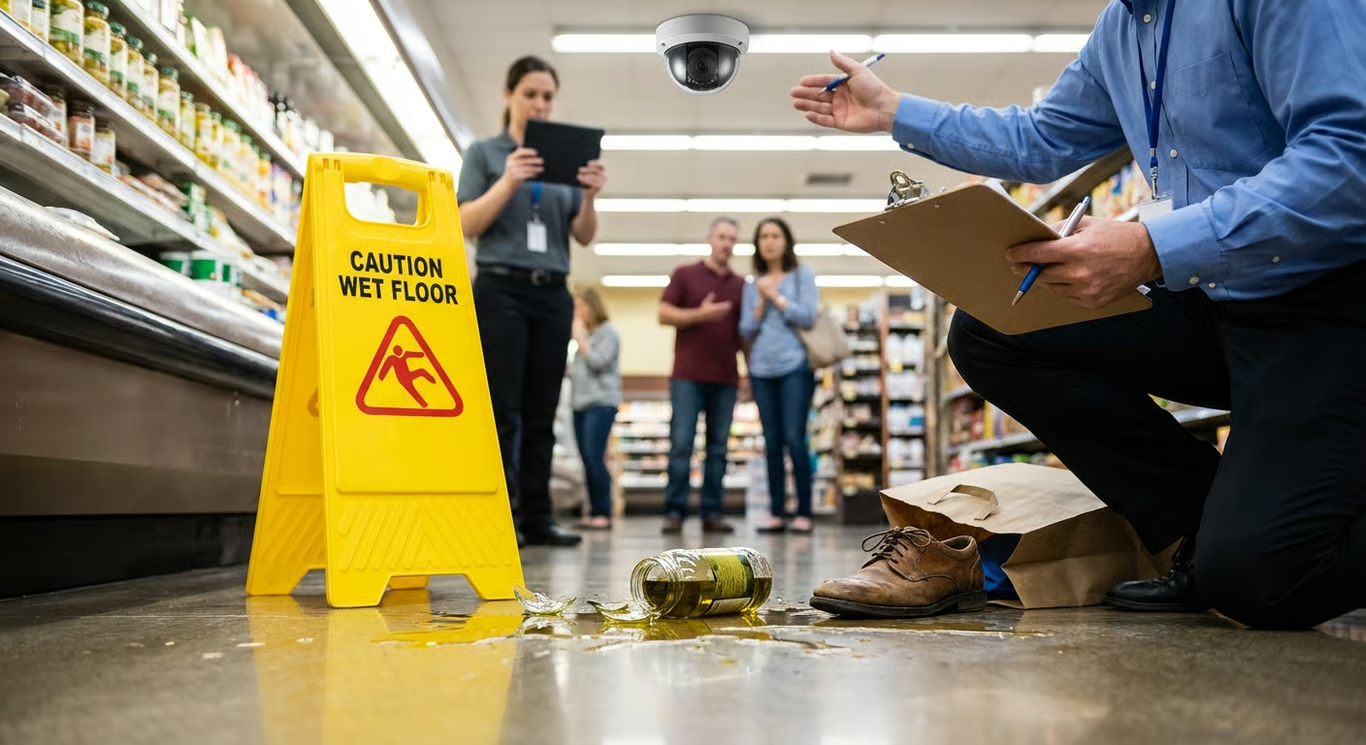
More commonly, plaintiffs rely on **constructive knowledge**. This legal concept argues that the store *should* have known about the hazard if they were conducting reasonable inspections. For instance, if a spill was on the floor long enough to dry and become sticky, or if it had cart tracks running through it, this evidence suggests it was there for a long time. Lawyers often use store video footage and cleaning logs to prove that the store failed to inspect the area for an unreasonable amount of time.
South Carolina courts are very strict about this: they do not allow juries to guess or speculate. You cannot simply argue that the store “must have known.” You generally need some evidence regarding the passage of time. Witness testimony stating they saw the spill 20 minutes earlier, or surveillance video showing the hazard was present for an extended period, is critical to surviving a motion to dismiss.
“To successfully prove negligence in a South Carolina slip and fall case, the injured person must establish that the property owner owed a duty of care, breached that duty, the breach caused the injury, and the plaintiff suffered damages.” -Mickle & Bass Law Firm
Sadly, many claims are dismissed because the injured person could not show how long the substance was on the floor. If a grape falls on the floor and you slip on it ten seconds later, the store likely didn’t have a “fair chance” to discover and fix it, meaning they weren’t negligent. Proving that the store had enough time to react but chose not to is often the turning point in these legal battles.
Common Causes of Slip & Fall Accidents in South Carolina Retail Stores
Liquid-related hazards are perhaps the most frequent culprits in retail accidents. This includes wet floors resulting from mopping without proper signage, spilled drinks or broken food jars in grocery aisles, and leaking refrigeration units. Additionally, South Carolina’s weather can play a role; tracked-in rainwater near store entrances can turn tile floors into skating rinks if mats aren’t placed down or changed frequently.
Tripping hazards and layout issues are also major sources of injury. Shoppers often trip over boxes left in walkways by stocking crews, uneven flooring or cracked tiles, and loose mats or rugs that haven’t been secured. Cluttered aisles can force customers to navigate tight spaces where they might not see obstacles, and poorly maintained escalators or merchandise falling from high shelves also pose significant risks.
Environmental factors shouldn’t be overlooked, either. Poor lighting in parking lots or stairwells can hide changes in elevation or debris that would otherwise be obvious. Similarly, unsafe stairs that lack proper handrails or have broken steps can create or worsen slip and fall risks, turning a simple trip to the store into a trip to the emergency room.
What to Do Immediately After a Slip & Fall in a South Carolina Store
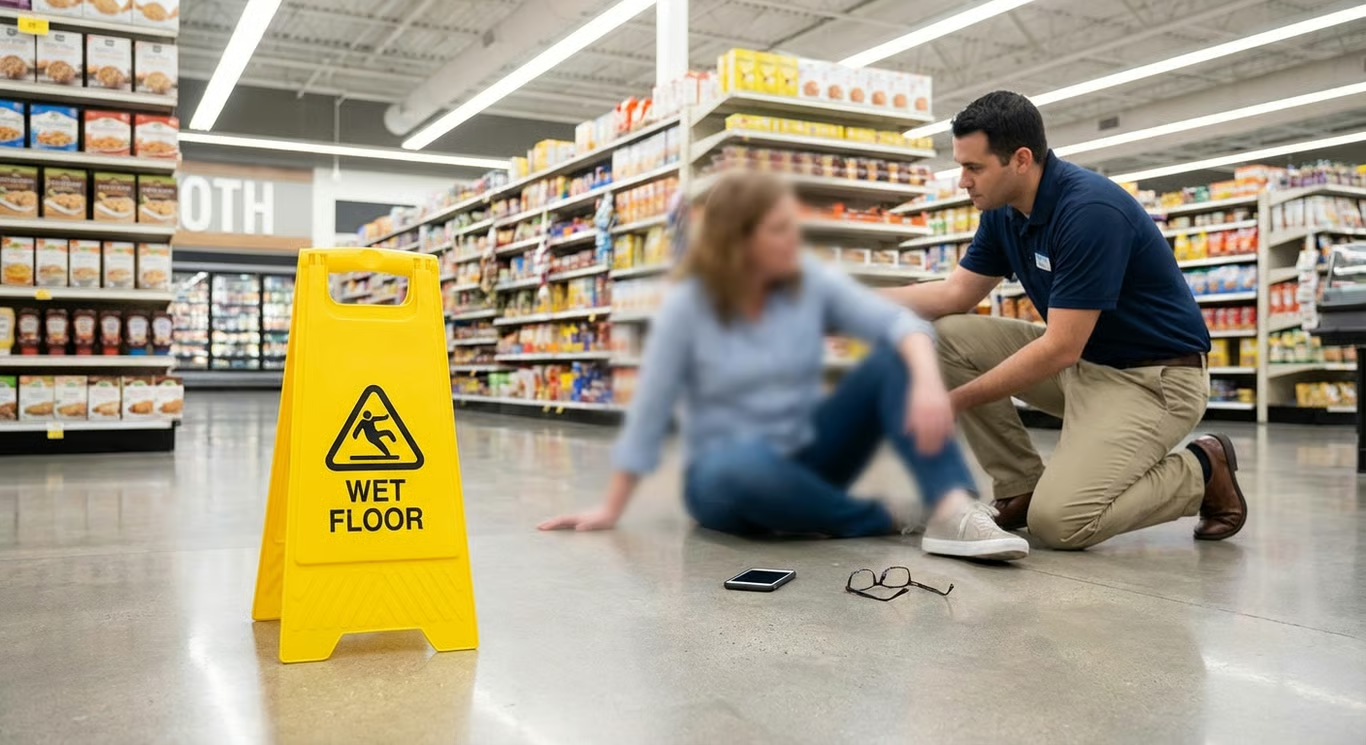
Your health comes first, so getting medical attention is the absolute priority. Even if you feel embarrassed or think you are “fine,” adrenaline can mask serious injuries like fractures or concussions. Seeking prompt medical evaluation not only ensures you get the care you need but also creates an official medical record connecting your injuries to the date and time of the accident.
“South Carolina courts have made it clear that a jury is not allowed to speculate or guess as to how long a hazard might have been present.” -Jordan Law Center
Once you are stable, you must report the incident to the store management immediately. Do not just tell a cashier; ask for a manager and ensure an incident report is filled out. While they might not give you a copy, you should ask for one anyway. At the very least, write down the name of the manager you spoke to and the time of the report, as this documentation proves the store was notified.
If you are able, document the scene thoroughly before leaving. Take pictures or videos of the hazard that caused you to fall—whether it’s a puddle, a loose wire, or a hole in the pavement. Capture the lighting conditions and whether any “Wet Floor” signs were present. Also, try to get the names and phone numbers of any other shoppers who witnessed the fall, as their testimony can be invaluable later.
Finally, be very careful about what you say and preserve your evidence. Do not apologize or say things like “I’m so clumsy,” as these statements can be used against you. Keep the shoes and clothes you were wearing in a safe place (don’t wash them if they have the spilled substance on them), and save all receipts and medical records. Avoid signing any broad release forms from the store until you’ve had legal advice.
How South Carolina’s Comparative Negligence Rule Can Affect Your Retail Slip & Fall Claim
South Carolina follows a “modified comparative negligence” rule, which can heavily influence your final payout. This rule means that your compensation can be reduced by the percentage of fault assigned to you. However, there is a catch: if you are found to be more than 50% at fault for the accident, you are barred from recovering any money at all.
Retail stores and their insurance companies know this rule well and will try to shift the blame onto you. They might argue that you were texting while walking, that you were wearing unsafe footwear like flip-flops, or that you ignored a warning cone. If a jury decides your damages are $100,000 but finds you were 20% at fault for not watching where you were going, you would only receive $80,000.
“Evidence commonly includes photographs or videos of the hazard, eyewitness accounts, medical records, and documentation of the property owner’s negligence, such as prior complaints or maintenance logs.” -Josh Golson Law
Common defenses also include the “open and obvious” doctrine, where the store argues the hazard was so visible that any reasonable person would have avoided it. An experienced attorney can help counter these arguments by showing that the hazard wasn’t actually obvious or that store displays distracted you, which is exactly what retail displays are designed to do.
Deadlines and Procedure: South Carolina Statute of Limitations and Claim Process
Time is of the essence in legal matters. In South Carolina, the general statute of limitations for personal injury cases, including slip and falls, is three years from the date of the injury. If you fail to file a lawsuit within this three-year window, the court will likely throw out your case, and you will lose your right to compensation forever.
The claim process usually begins by filing a claim with the store’s insurance carrier. This kicks off an investigation phase where evidence is gathered, and liability is debated. If the insurance company refuses to offer a fair settlement, or denies liability entirely, the next step is often filing a formal lawsuit. This moves the case into the court system, where more formal discovery and negotiations take place.
There are special considerations that make acting quickly vital. For example, if the “store” was actually a government-run facility (like an ABC store in some contexts), the notice requirements might be much shorter than three years. Furthermore, stores often delete surveillance footage after 30 or 60 days unless a lawyer sends a “spoliation letter” demanding they preserve it. Waiting too long can mean critical evidence is lost forever.
Evidence That Strengthens Slip & Fall Negligence Claims in SC Retail Stores
Building a strong case requires a mountain of evidence. Photographs of the scene and your injuries are foundational, but other documents are just as important. Incident reports, witness statements, and the store’s own inspection and cleaning logs can prove that they weren’t following their own safety protocols. Records of prior complaints about the same hazard can also establish that the store knew about the problem and ignored it.
“You must show that you were lawfully on the property, the store breached its duty, that breach caused your injury, and you suffered harm.” -Cate & Brough Law Firm
To prove the value of your case, you will need detailed medical records that link your injuries to the fall. Employment records are necessary to prove lost wages if you missed work. In severe cases, expert testimony from doctors or vocational experts may be needed to explain how the injury will affect your ability to work and enjoy life in the future.
Perhaps the most powerful evidence is surveillance footage. However, obtaining this usually requires the legal muscle of an attorney during the “discovery” phase of a lawsuit. Attorneys can also request internal store policies and training manuals to show that the employees weren’t trained properly on how to clean spills or inspect aisles, proving constructive knowledge of the danger.
When and Why to Consult a South Carolina Slip & Fall Lawyer After a Retail Store Accident
Navigating premises liability law can be complex, and having an expert on your side changes the playing field. An experienced South Carolina slip and fall attorney can evaluate the specific facts of your fall to see if they meet the strict legal elements of negligence. Services like those found at https://thesuperlawyer.com can be instrumental in connecting victims with legal professionals who understand the nuances of “Slip & Fall at South Carolina Retail Stores: How to Claim Negligence in SC.”
Lawyers do the heavy lifting that is difficult for an injured person to handle alone. They investigate the accident, issue subpoenas for video footage, interview witnesses, and handle all communication with aggressive insurance adjusters. If the insurance company refuses to pay a fair amount, a lawyer can file a lawsuit and prepare to take the case to trial, showing the store that you are serious about your recovery.
While many cases settle out of court, having legal representation is crucial when dealing with complex issues like constructive knowledge or comparative negligence. If the store is blaming you for the fall, or if you can’t prove how long a spill was on the floor, an attorney’s knowledge of case law and evidence collection can be the difference between a dismissed claim and a successful settlement.
Potential Compensation in South Carolina Retail Slip & Fall Cases
If your claim is successful, you are entitled to economic damages to cover your financial losses. This includes reimbursement for all past medical bills related to the fall, as well as estimated costs for future surgeries or therapy. It also covers lost income if you couldn’t work while recovering, and any diminished earning capacity if you can no longer do your old job.
You can also recover non-economic damages, which are intended to compensate you for the human cost of the injury. This includes money for physical pain and suffering, emotional distress, and the loss of enjoyment of life. If the injury prevents you from picking up your grandchildren or enjoying your hobbies, the law recognizes that as a compensable loss.
Ultimately, the amount of compensation depends on several factors. The severity of your injuries, the clarity of the liability evidence, and the amount of insurance coverage the store has all play a role. Additionally, as discussed, any percentage of fault assigned to you will reduce the final award, making a strong evidence-based argument essential for maximizing your recovery.
Frequently Asked Questions: Slip & Fall at South Carolina Retail Stores
1. Is a South Carolina retail store automatically liable if I slip and fall on its property?
No, liability is never automatic in South Carolina. Being injured on the property is not enough; you must prove that the store was negligent. This means you have to demonstrate that the store owed you a duty of care, breached that duty by failing to fix a known hazard, and that this specific breach caused your injury. If the store acted reasonably, they may not be liable even if you were hurt.
2. How long do I have to file a slip & fall claim against a store in South Carolina?
Generally, you have three years from the date of the accident to file a personal injury lawsuit in South Carolina. This is known as the statute of limitations. However, it is dangerous to wait until the last minute. Evidence disappears, and witnesses forget details. Additionally, if a government entity is involved, the deadline could be much shorter, so acting early is always best.
3. What if I was partly at fault for my fall in the store?
You can likely still recover compensation thanks to South Carolina’s modified comparative negligence rule, provided you were not more than 50% at fault. If you are found to be partially responsible—for example, 20% at fault—your total compensation award will simply be reduced by that 20%. If you are 51% or more at fault, however, you receive nothing.
4. Do I need a lawyer for a South Carolina retail slip & fall case?
While you are not legally required to have a lawyer, it is highly recommended. Retail stores and their insurers have teams of lawyers working to deny claims. An attorney can help level the playing field by gathering hard-to-get evidence like video footage, accurately calculating your damages, and navigating the complex rules of premises liability to ensure you get a fair shot at compensation.
5. What should I do if the store’s insurance adjuster calls me after my fall?
Be very cautious. Insurance adjusters are trained to save the company money, not to help you. Avoid giving a recorded statement, as they may try to get you to admit fault or downplay your injuries. Do not accept a quick settlement offer before you know the full extent of your medical needs. It is usually best to tell them you are consulting with an attorney before discussing the case further.
Conclusion: Protecting Your Rights After a Slip & Fall at a South Carolina Retail Store
Slip and fall cases in South Carolina retail stores are more complicated than they appear. To win, you must move beyond the fact that you fell and prove that the store failed in its duty to keep you safe. You must establish that they knew—or should have known—about the hazard and did nothing to fix it. From the moment the accident happens, the clock is ticking on gathering evidence and filing a claim. Understanding the nuances of invitee status, constructive knowledge, and comparative negligence is vital to ensuring that a store’s negligence doesn’t become your financial burden.
If you or a loved one has been injured in a store, do not leave your future up to chance or the “generosity” of an insurance company. Seek medical attention immediately, document everything you can, and consult with a qualified South Carolina premises liability attorney to review your case for “Slip & Fall at South Carolina Retail Stores: How to Claim Negligence in SC.” A skilled lawyer can help you navigate the legal maze, fight for the compensation you deserve, and ensure your rights are protected every step of the way.