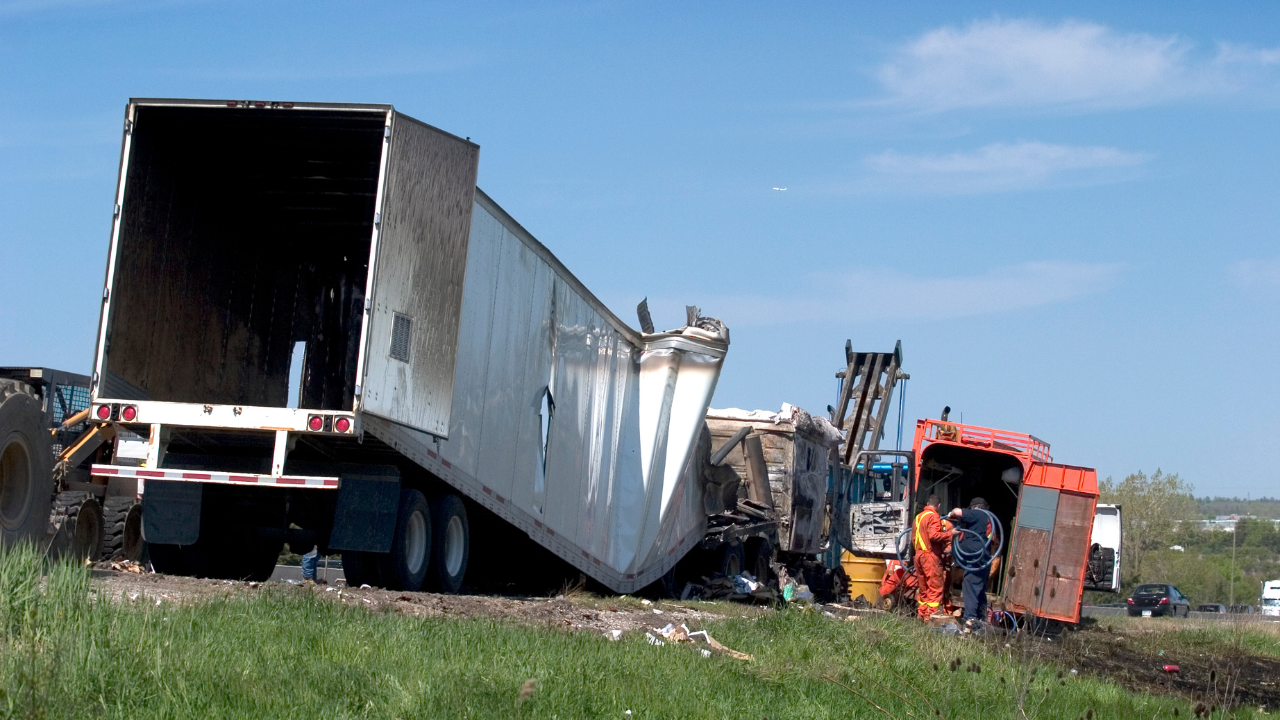
The I-95 corridor running through South Carolina is one of the busiest and most dangerous stretches of highway in the Southeast. Because this interstate serves as a major artery for commerce along the East Coast, the volume of tractor-trailers and heavy commercial vehicles is incredibly high. Unfortunately, the combination of high speeds, heavy traffic volume, and fatigued drivers often leads to severe crashes. In the context of these accidents, “liability” simply means legal responsibility. Determining who is liable is the first step in figuring out who must pay for the medical bills, vehicle damage, and other losses caused by a collision.
If you or a loved one has been involved in a crash on this highway, understanding your rights is crucial. This article will guide you through the complexities of trucking accident liability in South Carolina: I-95 Corridor Cases. We will focus on identifying the parties that can be held responsible, explaining how South Carolina’s modified comparative negligence laws work, and highlighting what victims need to know to pursue a successful claim. Navigating these legal waters can be tricky, but knowing the basics can help you make informed decisions about your future.
Understanding Trucking Accident Liability Under South Carolina Law
South Carolina operates as a “fault state” when it comes to vehicle accidents. This means that the person or entity that caused the accident is financially responsible for the damages resulting from it. To recover compensation, an injured victim must prove that the other party was negligent. Negligence generally means that someone failed to act with the level of care that a reasonable person would have used in the same situation. In trucking cases, this often involves proving that a driver or company failed to follow safety rules.
Furthermore, South Carolina follows a specific rule known as “modified comparative negligence.” Under this system, you can still recover damages even if you were partially at fault for the accident, as long as your share of the blame is not more than 50%. However, there is a catch: your compensation will be reduced by your percentage of fault. For example, if a jury decides you were 20% responsible for the crash, your final payout would be reduced by that 20%. If you are found to be 51% or more at fault, you are barred from receiving any compensation at all.
Applying these liability rules to truck crashes is much more complicated than in standard car accidents. Commercial truck accidents often involve catastrophic injuries and significantly higher financial stakes. Because there is so much money on the line, commercial carriers and their insurance companies fight very hard to shift the blame onto the victim. They may try to use the comparative negligence rule to argue that you were mostly at fault, thereby avoiding a payout. This complexity makes it essential to have a clear understanding of the law.
Unique Risks and Patterns on South Carolina’s I-95 Corridor
Interstate 95 acts as a critical lifeline for moving goods up and down the East Coast, making it a hotspot for commercial trucking activity in South Carolina. The sheer volume of 18-wheelers sharing the road with smaller passenger vehicles creates a dangerous mix. Drivers on this corridor often face long stretches of monotonous highway, sudden construction zones, and heavy congestion near exits. These conditions increase the likelihood of errors, especially when truck drivers are pushing to meet tight delivery deadlines.
Common crash scenarios on I-95 reflect the nature of this heavy traffic. We frequently see rear-end collisions caused by trucks failing to stop in time for traffic jams, as heavy trucks require much more distance to brake than cars. Jackknife accidents, where the trailer swings out to the side, and side-swipe crashes during lane changes are also prevalent. In the worst cases, multi-vehicle pileups can occur, involving several cars and trucks. These pileups create a nightmare for determining liability, as it can be difficult to pinpoint exactly which driver triggered the chain reaction.
Additionally, because I-95 is an interstate, it brings up unique legal challenges involving federal regulations and out-of-state parties. A truck crash in South Carolina might involve a driver from Florida, a trucking company based in New York, and a cargo loader from Georgia. While the lawsuit for a crash happening in SC is generally governed by South Carolina law, the investigation often spans multiple jurisdictions. This adds layers of complexity that don’t usually exist in a typical fender-bender on a local road.
Who Can Be Held Liable in a South Carolina I-95 Truck Accident?
In a standard car accident, you usually just sue the other driver. However, in trucking accident liability in South Carolina: I-95 Corridor Cases, the list of potential defendants is much longer. The primary parties that can be held liable include the truck driver, the trucking company (carrier), the owner of the truck or trailer, the maintenance provider, the company responsible for loading the cargo, and even the manufacturer of the truck parts. Identifying all these parties is vital because it increases the available insurance coverage for the victim.
The most obvious liable party is the truck driver. Driver liability is usually based on negligent actions behind the wheel. This can include speeding, driving while fatigued, driving under the influence of drugs or alcohol, or distracted driving (like texting). It also includes violations of federal “hours-of-service” rules, which limit how long a driver can be on the road without a break. If a driver breaks these traffic or safety laws and causes a crash, they are personally liable.
However, the trucking company is often the more significant target for a claim because they carry larger insurance policies. A trucking company can be held directly liable for its own negligence. This might include negligent hiring (hiring a driver with a bad record), inadequate training, or failing to supervise their employees. Crucially, companies can be liable if they pressured drivers to break safety rules to speed up deliveries or if they failed to maintain their fleet of vehicles properly.
“After a trucking accident in South Carolina, the person who caused the crash is liable for any losses.” -David Blackwell Law
Finally, third parties can also share the blame. For instance, if a crash was caused by a tire blowout or brake failure, a maintenance contractor might be at fault for doing a poor repair job. Similarly, if the accident happened because the cargo shifted and caused the truck to tip over, the third-party company that loaded the trailer could be liable for an unbalanced or overweight load. In some cases, if a specific part was defective from the start, the manufacturer could be sued. Each of these parties may bear a percentage of the fault.
Comparative Negligence and Shared Fault on I-95
It is important to revisit the concept of modified comparative negligence because insurance adjusters will almost always try to use it against you. Remember, under South Carolina law, you can recover damages as long as your fault is less than 51%. This means that even if you made a small mistake, you are not automatically disqualified from getting help with your medical bills. The goal of the insurance company is to push your percentage of fault as high as possible to reduce what they have to pay.
On the I-95 corridor, there are specific behaviors that insurers often cite to argue shared fault. For example, they might claim that a passenger vehicle was following the truck too closely (tailgating) or hanging out in the truck’s “blind spot” (the No-Zone). They might also argue that a car made an unsafe lane change in front of a speeding truck. Even if the truck driver was mostly wrong, if a jury believes you were 30% at fault for cutting them off, your $100,000 claim would drop to $70,000.
Because of these tactics, objective evidence is absolutely critical. In multi-vehicle pileups common on I-95, “he-said, she-said” arguments don’t hold up well. Attorneys rely on dashcam footage, data from the truck’s Engine Control Module (ECM), skid mark analysis, and independent witness statements to prove exactly what happened. This evidence helps to accurately allocate fault percentages, ensuring that a victim isn’t unfairly blamed for a crash caused by a negligent truck driver.
Vicarious Liability and Employer Responsibility in South Carolina Trucking Cases
One of the most powerful legal tools in trucking cases is the doctrine of “vicarious liability,” often referred to by the Latin term respondeat superior. This legal principle holds that an employer can be held liable for the negligent acts of their employees, provided those acts occurred within the “scope of employment.” In simple terms, if a truck driver causes a crash while doing their job, the trucking company is responsible for the damage, even if the company itself didn’t do anything specific wrong at that moment.
South Carolina courts look closely at whether the driver was acting within the scope of their employment at the time of the crash. Generally, if the driver was hauling cargo, driving to a pickup location, or refueling the truck, they are considered to be on the job. However, disputes can arise if the driver was on a personal detour or using the truck without permission. In I-95 cases, proving the driver was “on the clock” is usually straightforward, but it is a necessary step to link the company to the accident.
“South Carolina uses a modified comparative negligence law to determine fault in accidents, including truck accidents…you can collect compensation as long as you are less than 51 percent at fault.” -Johnson + Johnson, Attorneys at Law
Establishing vicarious liability is critical for victims because individual truck drivers rarely have the personal assets or insurance coverage to pay for a catastrophic injury. Trucking companies, on the other hand, have deep pockets and substantial commercial insurance policies. By using vicarious liability, a lawyer can access these resources to ensure that a victim receives full compensation for long-term medical care and disability.

Key Federal and South Carolina Trucking Regulations That Impact Liability
The trucking industry is heavily regulated to keep the public safe. The Federal Motor Carrier Safety Administration (FMCSA) sets the baseline rules that all interstate trucking companies must follow. These regulations cover everything from how often trucks must be inspected to how cargo must be secured. When a trucking accident occurs on I-95, one of the first things investigators look for is whether any of these federal safety standards were violated.
One of the most important sets of rules involves “hours-of-service” (HOS). These federal regulations dictate that truck drivers generally cannot drive for more than 11 hours after having 10 consecutive hours off duty. There are also weekly limits to prevent cumulative fatigue. Violations of these rules are common causes of accidents. If an attorney can prove via electronic logbooks (ELDs) that a driver was over their hours, it is strong evidence of negligence.
In addition to federal rules, South Carolina has its own specific statutes regarding vehicle operation. These include weight limits for vehicles on state roads and specific requirements for conduct after an accident. For example, SC law mandates that drivers must stop, render aid, and exchange information. Failure to do so can result in criminal charges and can also be used in a civil case to show a disregard for safety and the law.
Ultimately, violations of either federal or state regulations serve as powerful evidence. In the legal world, breaking a safety law that leads to an injury is often considered “negligence per se.” This means the act of breaking the law is proof of negligence in itself. Identifying these violations can shift liability squarely onto the trucking carrier, making it much harder for them to defend their case in court.
Insurance Coverage and Policy Limits in South Carolina Trucking Accidents
Commercial trucks are required to carry much higher liability insurance limits than regular passenger cars. While a typical car might have a minimum policy of $25,000, federal regulations often require interstate carriers transporting non-hazardous freight to carry at least $750,000 in liability coverage. Trucks carrying hazardous materials require even higher limits, sometimes up to $5 million. This higher coverage is necessary because the damage caused by an 80,000-pound truck is often devastating.
“The trucking company can have employer liability for the actions of its driver. It may also be directly negligent for its hiring, training, vehicle maintenance, and inspection policies or for pressuring the trucker to drive without enough sleep.” -David Blackwell Law
In South Carolina, the insurance landscape can get complicated because there may be multiple policies in play. Often, the tractor (the front part of the truck) is insured by one policy, while the trailer is insured by another. Furthermore, the motor carrier might have a general liability policy, and large companies often have “umbrella” or “excess” coverage that kicks in if the primary policy limits are exhausted. Finding all these layers of coverage is essential.
Identifying every applicable policy is crucial in catastrophic I-95 crashes where medical bills and lost future earnings can run into the millions. If a lawyer only finds the primary policy, the victim might settle for less than they actually need. Insurance companies know this and often try to settle quickly before all policies are discovered. This is why a thorough investigation into the insurance structure of the trucking company is a key part of the liability process.
Investigating I-95 Trucking Crashes: Evidence That Proves Liability
Building a strong case starts with immediate evidence from the scene. This includes the official police crash report, which provides an initial determination of fault. Photographs of the vehicles, the road conditions, and the debris field are vital. Eyewitness statements and measurements of skid marks can also help reconstruct how the collision occurred. This “perishable” evidence needs to be collected as soon as possible before rain washes it away or memory fades.
However, the most damning evidence usually comes from the truck itself. Modern commercial trucks are equipped with Electronic Control Modules (ECMs), often called “black boxes.” These devices record data such as speed, braking, and engine RPMs in the seconds before a crash. Additionally, Electronic Logging Devices (ELDs) track the driver’s hours of service. Maintenance records, inspection reports, and GPS data can also reveal a pattern of negligence that isn’t visible at the crash scene.
In complex I-95 collisions, especially those involving multiple vehicles, expert witnesses are often necessary. Accident reconstruction experts use physics and engineering to analyze the scene data and create a simulation of the crash. Trucking safety experts can testify about industry standards and explain to a jury exactly how the trucking company failed to follow the rules. These experts provide the technical proof needed to win a liability dispute.
Time is the enemy in these investigations. Trucking companies control the evidence (like the black box and the truck itself). To prevent them from destroying or overwriting this data, a lawyer must send a “spoliation letter” immediately. This legal document formally warns the company that they must preserve all evidence related to the crash. Without this step, crucial proof of liability could be lost forever.
“South Carolina applies the doctrine of respondeat superior to determine vicarious liability. This doctrine allows a person or company to be held responsible for the negligent actions of another when a legal relationship exists, such as employer and employee.” -Connell Law Firm
Common Injuries and Damages in South Carolina I-95 Trucking Cases
The physical toll of a trucking accident is often severe. Because of the size difference between a semi-truck and a passenger car, occupants of the car frequently suffer life-altering injuries. Common injuries include traumatic brain injuries (TBI), spinal cord damage leading to paralysis, broken bones, and severe internal organ damage. Tragically, wrongful death is also a frequent outcome of high-speed crashes on the I-95 corridor.
Victims of these crashes are entitled to various types of damages to help them rebuild their lives. “Economic damages” cover financial losses like current and future medical bills, rehabilitation costs, and lost wages. “Non-economic damages” compensate for intangible losses, such as pain and suffering, emotional distress, and loss of consortium (the loss of companionship for a spouse). Diminished earning capacity is also a major factor if the victim can no longer work in their previous job.
In particularly egregious cases, punitive damages may be available. These are not meant to compensate the victim, but rather to punish the wrongdoer and deter similar conduct in the future. For example, if a trucking company knowingly allowed a driver with a history of drunk driving to operate a rig, or if a driver was under the influence at the time of the crash, a jury might award punitive damages to send a message that such recklessness will not be tolerated.
What to Do After an I-95 Truck Accident in South Carolina
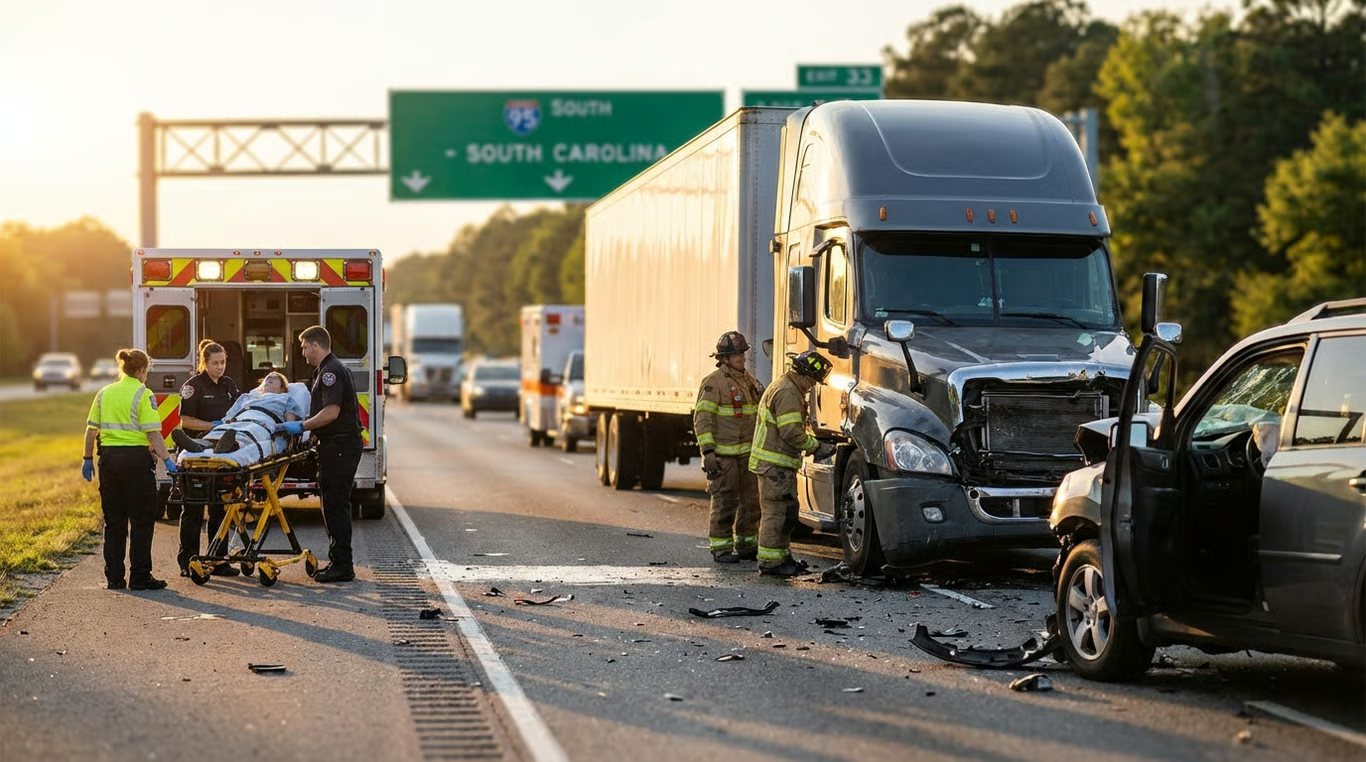
The moments immediately following a truck accident are chaotic, but your actions can impact your health and your legal case. First and foremost, prioritize safety. If you can move your vehicle to the shoulder, do so. Call 911 immediately to get police and paramedics to the scene. Even if you don’t feel hurt right away, accept a medical evaluation. Adrenaline can mask serious injuries, and having a medical record from the scene is important evidence.
Under South Carolina law, you are required to stop at the scene, exchange information with the other drivers, and render reasonable assistance to anyone who is injured. Leaving the scene of an accident involving injury is a serious crime. While waiting for the police, exchange insurance and contact details with the truck driver, but do not apologize or admit fault. Anything you say can be used against you later.
If you are physically able, try to gather evidence. Take pictures of the damage to all vehicles, the license plate of the truck, the DOT number on the cab door, and the road conditions. Get the names and phone numbers of any witnesses who saw what happened. Note the weather and traffic conditions. This raw information can be incredibly helpful to your lawyer later on.
“S.C. Code § 56-5-1210 requires a driver in an accident resulting in injury or death to stop their vehicle and report the accident…These accident reporting requirements apply to truck accidents and all accidents in South Carolina.” -Bobby Jones Law
Finally, it is highly recommended that you contact an experienced attorney before speaking to the trucking company’s insurance adjusters. Services like The Super Lawyer can connect you with legal professionals who understand trucking accident liability in South Carolina: I-95 Corridor Cases. Getting legal help early ensures that evidence is preserved and that you don’t accidentally say something that lowers the value of your claim.
How a South Carolina Truck Accident Lawyer Builds an I-95 Corridor Liability Case
A specialized truck accident lawyer plays a distinct role compared to a general personal injury attorney. Their primary job is to conduct a deep investigation. This involves identifying every potentially liable party—from the driver to the cargo loader—and sending out spoliation letters to save the black box data. They analyze thousands of pages of trucking logs and maintenance records to find the “smoking gun” that proves the company was negligent.
Once the evidence is gathered, the attorney moves to negotiation and litigation. Trucking insurance companies are tough negotiators, but a lawyer armed with solid evidence can push back. They work with medical experts to calculate the full lifetime cost of your injuries, ensuring that any settlement offer covers future needs, not just past bills. If the insurer refuses to pay a fair amount, the lawyer prepares to file a lawsuit and take the case to trial.
Local knowledge is also a key asset. An attorney familiar with the South Carolina court system understands how judges in counties along the I-95 corridor typically handle these cases and how juries tend to react to trucking negligence. This insight helps in crafting a legal strategy that resonates with the local community, maximizing the chances of a favorable verdict for the victim.
Frequently Asked Questions About Trucking Accident Liability in South Carolina: I-95 Corridor Cases
1. Who is usually held liable after a truck accident on I-95 in South Carolina?
Liability often starts with the truck driver, as they are the one behind the wheel. However, in many cases, liability extends to the trucking company (the carrier) because they are responsible for the driver’s actions and the vehicle’s safety. Other parties can include the owner of the truck, the maintenance provider who worked on the brakes, the cargo loaders who packed the trailer, or the manufacturer of a defective part.
It is important to remember that every case is fact-specific. In complex accidents, it is common for multiple parties to share the blame. For example, a driver might be 60% at fault for speeding, while a maintenance shop is 40% at fault for failing to fix a brake line. Under comparative negligence principles, your lawyer will work to hold all responsible parties accountable to ensure you get full compensation.
2. How does South Carolina’s 51% rule affect my I-95 truck accident claim?
South Carolina follows a modified comparative negligence rule with a 51% bar. This means you can recover damages for your injuries as long as you are found to be less than 51% at fault for the accident. If a jury decides you are 51% or more responsible, you cannot recover any money at all. This is why establishing liability accurately is so critical.
If you are less than 51% at fault, your compensation is reduced by your percentage of responsibility. For example, if your total damages are $100,000 but you are found to be 20% at fault for the crash, your award would be reduced by $20,000, leaving you with $80,000. Your attorney’s goal is to minimize your percentage of fault to maximize your recovery.
3. What evidence is most important to prove liability against a trucking company?
The most critical evidence usually includes the truck’s ECM (black box) data, which shows speed and braking inputs, and the driver’s ELD (Electronic Logging Device) logs, which track hours of service. Other key documents include the driver’s qualification file (showing training and history), maintenance and inspection records for the truck, and dispatch communication logs.
This evidence is vital because it allows your lawyer to look beyond the crash scene. It can reveal if the driver was over their legal driving hours (fatigue), if the truck had known mechanical issues that were ignored (negligent maintenance), or if the company was pushing the driver to speed (unsafe scheduling). These factors support claims for both direct negligence against the company and vicarious liability.
4. How long do I have to file a lawsuit after an I-95 truck crash in South Carolina?
In South Carolina, the statute of limitations for most personal injury claims, including truck accidents, is generally three years from the date of the accident. If you are filing a wrongful death claim, the clock usually starts on the date of death. However, if a government vehicle was involved, the deadline might be shorter (often two years under the Tort Claims Act).
While three years sounds like a long time, you should not wait. Evidence in trucking cases—especially digital data and video footage—can be lost, deleted, or destroyed within weeks of the crash. Speaking with a lawyer as soon as possible ensures that this evidence is preserved, giving you the best chance to prove your case before the legal deadline expires.
5. Do I really need a lawyer if the truck driver’s insurer has already contacted me?
Yes, it is highly advisable. Insurance adjusters work for the insurance company, not for you. Their goal is to minimize the amount of money they pay out. They may contact you quickly to offer a low settlement before you fully understand the extent of your injuries, or they may ask for a recorded statement to try and get you to admit fault.
Having a lawyer protects your rights. An experienced attorney can handle all communications with the insurers, preventing them from using tricks to devalue your claim. They can also accurately value your claim to include future medical needs and pain and suffering, and they have the resources to litigate the case if the insurance company refuses to offer a fair settlement.
Conclusion: Protecting Your Rights After a South Carolina I-95 Trucking Accident
Navigating the aftermath of a collision on the interstate is overwhelming, but understanding “Trucking Accident Liability in South Carolina: I-95 Corridor Cases” is the first step toward recovery. South Carolina’s fault-based system and modified comparative negligence rules mean that proving who is responsible is essential. Whether liability rests with a fatigued driver, a negligent trucking carrier, a cargo loader, or a maintenance provider, uncovering the truth requires a deep dive into federal regulations and preserved evidence. By leveraging legal concepts like vicarious liability, victims can access the insurance policies necessary to cover their medical bills and lost wages.
If you or someone you love has been injured in a truck accident on I-95, do not try to fight the insurance companies alone. The stakes are too high, and the laws are too complex. We strongly urge you to seek a consultation with an experienced South Carolina truck accident attorney immediately. They can help you preserve critical evidence, navigate the complexities of multiple insurers, and fight for the full compensation you deserve. Act quickly to protect your rights and hold the negligent parties accountable.