Chicago Hit-and-Run Accident Lawyer
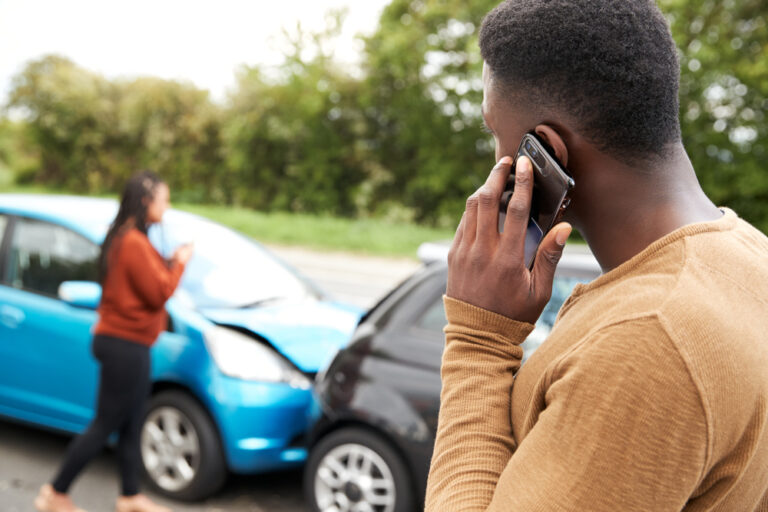
If you’ve been injured in a hit-and-run accident in Chicago, you’re facing a stressful and confusing situation. The driver who hit you fled the scene, and you’re left dealing with injuries, vehicle damage, and mounting medical bills. You need an experienced Chicago hit-and-run accident lawyer who knows how to track down fleeing drivers, navigate insurance coverage issues, and fight for the compensation you deserve.
At our firm, we understand the unique challenges of hit-and-run cases in Chicago. We know how to investigate these crashes, work with Chicago Police Department investigators, identify liable parties, and maximize your recovery—even when the at-fault driver is never found.
Call us today for a free consultation. We work on a contingency fee basis, so you pay nothing unless we win your case.
What Is a Hit-and-Run Accident?
A hit-and-run accident occurs when a driver causes a crash and then leaves the scene without stopping to provide their information or help injured victims. In Chicago and throughout Illinois, drivers are legally required to stop after any collision that causes injury, death, or property damage.
Hit-and-run accidents are both a criminal offense and a civil matter. The driver who flees faces criminal charges under Illinois law, but you also have the right to pursue a personal injury claim to recover compensation for your injuries and losses.
Common hit-and-run scenarios in Chicago include:
- A driver rear-ends your car at a stoplight and speeds away
- A vehicle sideswipes you on Lake Shore Drive and doesn’t stop
- A driver hits you in a parking lot and leaves without leaving a note
- A pedestrian or cyclist is struck by a car that flees the scene
- A drunk driver causes a crash and runs to avoid arrest
Even if the fleeing driver is never identified, you may still have options for financial recovery through your own insurance coverage.
Illinois Hit-and-Run Laws and Your Legal Rights
Under the Illinois Vehicle Code, every driver involved in a crash must:
- Stop immediately at the scene
- Provide their name, address, and vehicle registration information
- Show their driver’s license if requested
- Give reasonable assistance to injured persons, including calling 911
Leaving the scene of an accident is a serious crime. In Illinois, a hit-and-run that causes injury can result in felony charges, significant fines, and even prison time.
As a hit-and-run victim, you have important legal rights:
- The right to file a police report with the Chicago Police Department
- The right to file an insurance claim with your own insurer (uninsured motorist coverage)
- The right to pursue a personal injury lawsuit if the driver is identified
- The right to compensation for medical bills, lost wages, pain and suffering, and property damage
The statute of limitations for personal injury cases in Illinois is generally two years from the date of the accident. For property damage claims, you have five years. However, it’s crucial to act quickly—evidence disappears, witnesses forget details, and surveillance footage gets erased.
What to Do After a Hit-and-Run Accident in Chicago
The steps you take immediately after a hit-and-run can make or break your case. Here’s what to do:
1. Call 911 Right Away
Report the accident to the Chicago Police Department immediately. A police report is critical for both the criminal investigation and your insurance claim. Give officers as many details as possible about the fleeing vehicle—color, make, model, license plate (even partial), direction of travel, and any distinguishing features.
2. Seek Medical Attention
Even if you feel fine, see a doctor as soon as possible. Some injuries (like whiplash, concussions, or internal bleeding) don’t show symptoms right away. Medical records also create crucial documentation linking your injuries to the crash.
3. Document the Scene
If you’re able, take photos and videos of:
- Vehicle damage
- Your injuries
- Skid marks, debris, or other evidence at the scene
- Street signs and landmarks showing the location
- Any nearby surveillance cameras
4. Look for Witnesses
Ask anyone who saw the crash for their contact information. Witness statements can help police identify the hit-and-run driver and strengthen your insurance claim.
5. Check for Surveillance Footage
Look for cameras at nearby businesses, traffic intersections, or residences. Chicago has red-light cameras and traffic cameras at many intersections. This footage can be critical, but it’s often erased after 30-90 days.
6. Notify Your Insurance Company
Report the accident to your own insurer promptly—usually within 24-72 hours. You may have uninsured motorist coverage that will pay for your injuries even if the hit-and-run driver is never found.
7. Contact a Chicago Hit-and-Run Accident Lawyer
Before you give a recorded statement to any insurance company or accept a settlement offer, talk to an experienced attorney. Insurance adjusters often try to minimize or deny hit-and-run claims. A lawyer protects your rights and handles all communications with insurers.
Who Pays After a Hit-and-Run? Insurance and UM/UIM Coverage
One of the biggest concerns after a hit-and-run is: “How will I pay my medical bills if the driver is never found?”
Fortunately, Illinois requires all drivers to carry uninsured motorist (UM) coverage, which covers you when an at-fault driver has no insurance—or when they can’t be identified, as in a hit-and-run.
Uninsured Motorist Coverage (UM)
Your UM coverage pays for:
- Medical expenses
- Lost wages
- Pain and suffering
- Permanent disability or disfigurement
In Illinois, the minimum UM coverage is $25,000 per person and $50,000 per accident, but many drivers carry higher limits.
Underinsured Motorist Coverage (UIM)
If the hit-and-run driver is identified but doesn’t have enough insurance to cover your damages, your UIM coverage can make up the difference.
Other Coverage That May Apply
- Medical payments (MedPay) coverage: Pays your medical bills regardless of fault, up to your policy limits
- Collision coverage: Pays to repair or replace your vehicle
- Personal injury protection (PIP): If you have this optional coverage, it pays medical expenses and lost wages quickly
Dealing With Your Own Insurance Company
Even though you’re filing a claim with your own insurer, they may still try to deny or minimize your claim. Insurance companies have a duty to handle claims in good faith, but they often:
- Delay investigations hoping you’ll give up
- Argue that your injuries aren’t related to the accident
- Offer lowball settlements before you know the full extent of your injuries
- Claim you didn’t report the accident quickly enough
A Chicago hit-and-run accident lawyer knows how to deal with these tactics and make sure your insurer honors your policy.
Compensation in Chicago Hit-and-Run Cases
Hit-and-run victims can recover several types of damages:
Economic Damages (Out-of-Pocket Losses)
- Medical expenses: Hospital bills, surgery, physical therapy, prescription medications, future medical care
- Lost wages: Income you’ve missed while recovering, plus reduced earning capacity if you can’t return to your old job
- Property damage: Vehicle repair or replacement, damaged personal belongings
Non-Economic Damages (Personal Losses)
- Pain and suffering: Physical pain, emotional distress, anxiety, depression
- Loss of enjoyment of life: Inability to participate in hobbies or activities you once enjoyed
- Disfigurement or scarring: Permanent physical changes from your injuries
- Loss of consortium: Impact on your relationship with your spouse
Punitive Damages
In rare cases where the hit-and-run driver is identified and their conduct was especially reckless (such as drunk driving), Illinois law allows punitive damages to punish the wrongdoer and deter similar behavior.
How a Chicago Hit-and-Run Lawyer Can Help
Hit-and-run cases are more complex than typical car accidents. When the at-fault driver has fled, you need an attorney who knows how to investigate, build evidence, and fight for maximum compensation.
Investigation and Evidence Collection
We work quickly to:
- Obtain police reports and crash reconstructions
- Interview witnesses before memories fade
- Secure traffic camera footage from Chicago’s red-light cameras and IDOT cameras
- Canvass the area for surveillance video from businesses and homes
- Work with accident reconstruction experts to analyze the crash
- Coordinate with Chicago Police Department hit-and-run investigators
The sooner you hire us, the more evidence we can preserve.
Identifying the At-Fault Driver
Our investigators use every available resource to track down fleeing drivers:
- Vehicle paint transfer analysis
- Partial license plate searches
- Social media and community tips
- Vehicle damage analysis (matching your car’s damage to the suspect vehicle)
- Working with Chicago Police detectives
Even a small piece of evidence—a partial plate number or vehicle description—can lead to identifying the driver.
Dealing With Insurance Companies
We handle all communications with insurance adjusters, protecting you from tactics designed to reduce your claim. We:
- File your uninsured motorist claim correctly and on time
- Gather medical records and bills to prove the full value of your injuries
- Calculate total damages, including future medical needs and lost earning capacity
- Negotiate aggressively for a fair settlement
- Take your case to trial if the insurer won’t offer reasonable compensation
Building a Strong Claim
We document every aspect of your case:
- Medical records linking your injuries to the accident
- Expert testimony on the severity and permanence of your injuries
- Employment records and pay stubs proving lost income
- Photos and videos of your injuries and recovery process
- Testimony from family and friends about how the accident changed your life
Protecting You From Common Pitfalls
We make sure you avoid mistakes that can hurt your claim:
- Missing filing deadlines with insurers or the statute of limitations
- Giving recorded statements that can be used against you
- Accepting a quick settlement before you know the full extent of your injuries
- Posting on social media in ways that contradict your injury claims
How Much Is My Hit-and-Run Case Worth?
Every hit-and-run case is unique. The value of your claim depends on:
- Severity of your injuries: More serious injuries (broken bones, traumatic brain injury, spinal cord damage) result in higher settlements
- Medical expenses: Current bills plus the cost of future treatment
- Lost income: Wages you’ve already missed plus future lost earning capacity
- Pain and suffering: How much your injuries have impacted your daily life
- Available insurance coverage: Your UM/UIM policy limits and any other coverage
- Strength of evidence: How clearly we can prove the other driver caused the crash
Many Chicago hit-and-run cases settle for $25,000 to $100,000 or more, depending on these factors. Catastrophic injury cases can be worth significantly more.
During your free consultation, we’ll review the specifics of your case and give you a realistic assessment of its value.
How Long Do I Have to File a Hit-and-Run Claim in Illinois?
Illinois law sets strict deadlines:
- Statute of limitations for personal injury: 2 years from the date of the accident
- Statute of limitations for property damage: 5 years from the date of the accident
- Insurance reporting deadlines: Usually 24-72 hours to report the accident, though you typically have longer to file the actual claim (check your policy)
Missing these deadlines can mean losing your right to compensation forever. Don’t wait—contact a Chicago hit-and-run accident lawyer as soon as possible.
Our Process for Handling Hit-and-Run Claims
When you hire us, here’s what happens:
Step 1: Free Consultation
We listen to your story, review available evidence, explain your rights, and answer your questions. There’s no cost and no obligation.
Step 2: Investigation
We immediately begin preserving evidence, obtaining police reports, interviewing witnesses, and searching for surveillance footage.
Step 3: Filing Your Insurance Claim
We file your uninsured motorist claim, medical payments claim, and any other applicable coverage with your insurer.
Step 4: Documenting Your Damages
We gather all medical records, bills, employment records, and other documentation proving your losses.
Step 5: Negotiating With the Insurance Company
We present a detailed demand package and negotiate aggressively for maximum compensation.
Step 6: Filing a Lawsuit if Necessary
If negotiations don’t result in a fair settlement, we file a lawsuit in Cook County Circuit Court or the appropriate Illinois court. We handle all aspects of the litigation process, including discovery, depositions, and trial.
Step 7: Settlement or Trial
Most cases settle before trial, but we prepare every case as if it will go to trial. If the insurance company won’t make a fair offer, we’re ready to present your case to a jury.
Throughout the process, we keep you informed and make sure you understand your options at every stage.
Why Local Chicago Counsel Matters
Choosing a lawyer who knows Chicago makes a real difference:
- Familiarity with Chicago Police Department procedures: We know how CPD’s hit-and-run unit works and how to coordinate with investigators
- Knowledge of local courts: We regularly appear in Cook County Circuit Court and understand how local judges and juries handle these cases
- Understanding of Chicago traffic patterns: We know high-accident areas like Lake Shore Drive, the Kennedy Expressway, and busy intersections
- Relationships with local experts: We work with Chicago-area accident reconstructionists, medical experts, and investigators
- Knowledge of local insurers: We’ve negotiated with the major insurance companies that cover Chicago drivers and know their tactics
When you hire a local Chicago hit-and-run accident lawyer, you get someone who understands your community and your case.
What to Expect in Your Free Consultation
Come prepared to discuss:
- How the accident happened (date, time, location, circumstances)
- Any information about the fleeing vehicle or driver
- Your injuries and medical treatment
- The police report (if you have a copy)
- Your insurance policy information
- Photos of the scene, your injuries, or vehicle damage
- Contact information for any witnesses
Don’t worry if you don’t have all these materials—we can obtain most of them for you. The most important thing is to call us as soon as possible so we can start protecting your rights.
During the consultation, we’ll:
- Listen to your story without judgment
- Explain your legal options
- Answer all your questions
- Give you an honest assessment of your case
- Explain how contingency fees work (you pay nothing unless we win)
There’s no pressure and no obligation. We’re here to help you understand your rights and make an informed decision.
FAQs
Most Chicago hit-and-run accident lawyers work on a contingency fee, meaning you pay no upfront fees and the attorney only gets paid if they recover money for you. The fee is typically a percentage (usually 33-40%) of your settlement or court award. If we don’t win, you don’t pay attorney fees. We also typically advance all case costs (filing fees, expert fees, investigation costs), which are reimbursed from your settlement.
Call 911 to report the accident to police. Seek medical attention right away, even if you feel fine. Document the scene with photos and videos if you can. Look for witnesses and get their contact information. Check for nearby surveillance cameras. Report the accident to your insurance company within 24-72 hours. Then contact a Chicago hit-and-run lawyer before giving any recorded statements or accepting settlement offers.
Yes. In Illinois, your uninsured motorist (UM) coverage pays for injuries when the at-fault driver can’t be identified. You can still recover compensation for medical bills, lost wages, pain and suffering, and other damages through your own insurance policy, even if the fleeing driver is never caught.
It varies. Some cases settle in a few months if liability and damages are clear. Others can take a year or more, especially if the at-fault driver is never identified and you’re pursuing an uninsured motorist claim through your own insurer, or if the insurer denies your claim and you have to file a lawsuit. The timeline depends on the severity of your injuries, how long treatment takes, and whether your insurer negotiates fairly.
Illinois follows a comparative negligence rule. You can still recover compensation even if you were partially at fault, as long as you weren’t more than 50% responsible. Your settlement will be reduced by your percentage of fault. For example, if you’re awarded $100,000 but found 20% at fault, you’d receive $80,000. A hit-and-run lawyer will work to minimize any alleged fault on your part.
Yes. Your collision coverage will pay to repair your vehicle (minus your deductible). If the hit-and-run driver is identified, you can pursue a claim against them for your deductible and any damage not covered by insurance. Illinois gives you five years to file a property damage lawsuit.
You can still pursue a claim. Give police any information you do have—vehicle color, make, model, distinguishing features, direction of travel, or even just part of the license plate. We’ll work with investigators to locate surveillance footage that may have captured the plate. Even without identifying the driver, your uninsured motorist coverage should still apply.
Generally, filing an uninsured motorist claim for a hit-and-run should not increase your rates, since you weren’t at fault. However, insurance policies and state regulations vary. Your lawyer can advise you on this and help you understand your policy. Don’t let fear of rate increases stop you from filing a legitimate claim—you’ve paid for this coverage.
If the driver is identified and was intoxicated, they’ll face serious criminal charges. In your civil case, evidence of drunk driving or drug impairment strengthens your claim. If the case goes to trial, a jury may award punitive damages in addition to compensatory damages because of the driver’s reckless behavior.
Schedule Your Free Consultation Today
Hit-and-run accidents are traumatic, confusing, and overwhelming. You shouldn’t have to navigate the legal system alone while you’re trying to recover from your injuries.
Our Chicago hit-and-run accident lawyers are here to help. We’ll investigate your crash, track down evidence, deal with insurance companies, and fight for every dollar you deserve.
You pay nothing unless we win your case. Call us today or contact us online to schedule your free, no-obligation consultation.
Time is critical in hit-and-run cases. Evidence disappears quickly. Don’t wait—contact us now and let us start building your case.
Additional Resources
- Illinois Secretary of State – Motor Vehicle Crash Reports
- Chicago Police Department – Traffic Crash Reports
- Illinois Department of Transportation – Crash Data
- Illinois Courts – Cook County Circuit Court
This page is for informational purposes only and does not constitute legal advice. Every case is different. Contact our firm for advice specific to your situation.